Buying guide · Tianhua Transformer engineering team
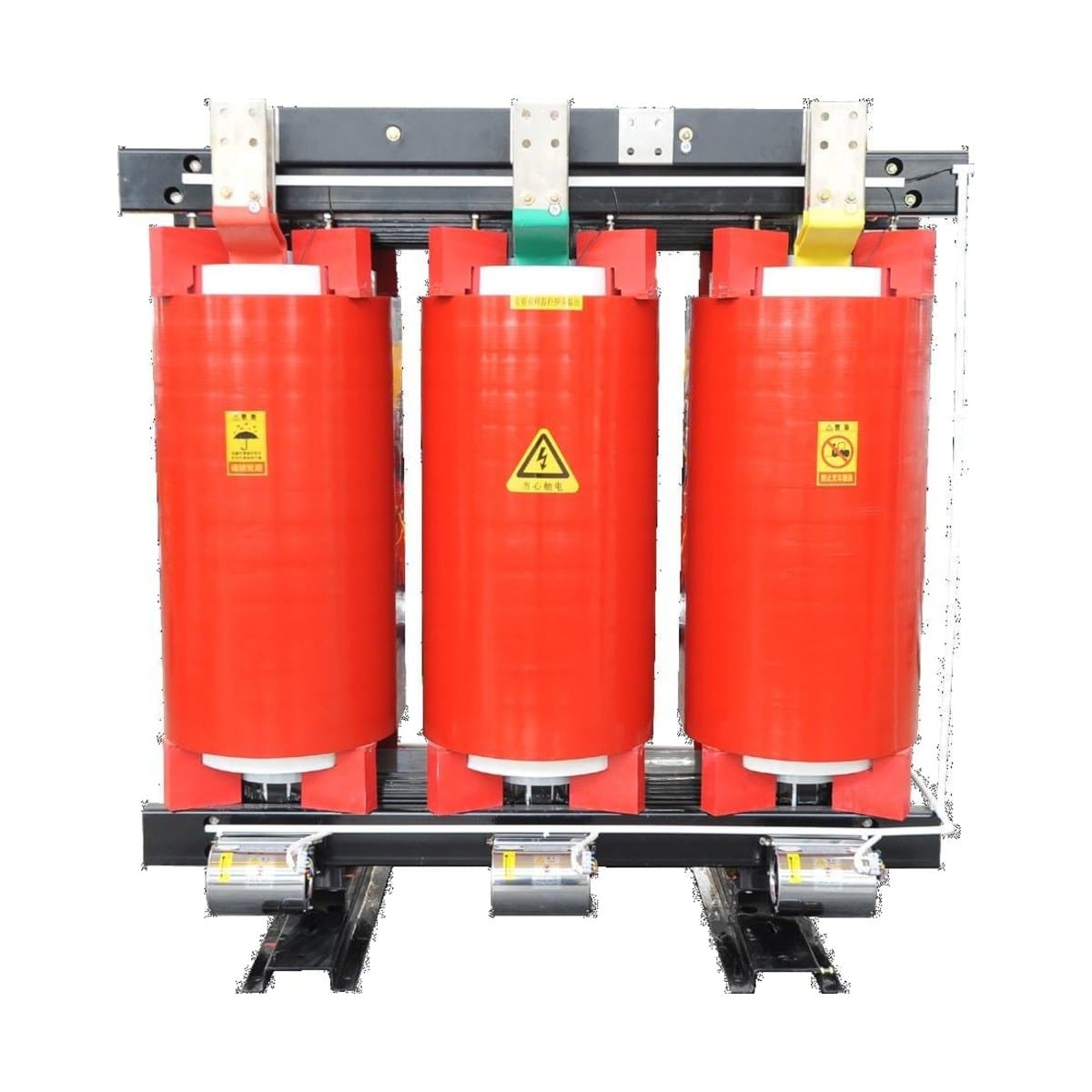
Choose dry-type when the transformer is indoors or fire safety matters. Decide between cast resin and VPI, then specify kVA, voltages, insulation class, enclosure IP rating and cooling (AN or AF). Tianhua makes cast resin (SCB12/13/14/18) and VPI (SG(B)10) transformers from 30 to 2,500 kVA at 6–24 kV, with partial discharge down to 10 pC.
Dry-type transformers have no oil, so there is no leak or pool-fire risk. They can be installed close to the load, inside buildings, saving cable and space.
| Ratings | 30 kVA to 2,500 kVA standard; special designs to 5,000 kVA |
|---|---|
| Voltage | 6 kV to 24 kV |
| Types | Cast resin SCB12 / 13 / 14 / 18, VPI SG(B)10, amorphous SCBH15 |
| Insulation | Class F (155 °C) standard; class H (180 °C) for VPI |
| Partial discharge | Down to 10 pC |
| Enclosure | Optional, to the IP rating you specify |
| Standards | IEC 60076-11, IEEE C57.12.01, GB 1094.11 |
High-rise buildings, hospitals, airports, metro and tunnels, data centers, shopping centers, offshore platforms and underground plants: anywhere oil leaks or fire risk are not acceptable. Cast resin is flame-retardant, self-extinguishing and needs little maintenance.
| Cast resin | VPI (vacuum pressure impregnated) | |
|---|---|---|
| Windings | Fully encapsulated in epoxy under vacuum | Impregnated with varnish, not encapsulated |
| Insulation class | F (155 °C) | H (180 °C) |
| Best for | Humid, dusty and coastal sites; buildings and data centers | Special designs: rectifier, phase-shifting, isolation; lighter weight |
| Tianhua series | SCB12, SCB13, SCB14, SCB18, SCBH15 amorphous | SG(B)10 |
| Parameter | What to give |
|---|---|
| Rating and voltages | kVA, primary and secondary voltage, vector group (usually Dyn11) |
| Insulation class and temperature rise | F / 100 K or H / 125 K |
| Environment classes | E, C and F classes to IEC 60076-11 (for example E2, C2, F1) |
| Enclosure | Without enclosure, or IP20 / IP23 / IP31 or as specified |
| Cooling | AN (natural air) or AN / AF with fans for short-term extra capacity |
| Harmonics | K-factor for IT, UPS and inverter loads |
| Monitoring | PT100 sensors and temperature controller, alarm and trip contacts |
IT, UPS and variable-speed drive loads create harmonics that heat windings. Specify a K-factor design or give the harmonic spectrum, and our engineers size the windings and cooling to suit. Data center solutions.
Routine tests include winding resistance, ratio and vector group, losses and impedance, applied and induced voltage tests and partial discharge measurement. Temperature rise, lightning impulse and sound level tests are available as type or special tests.
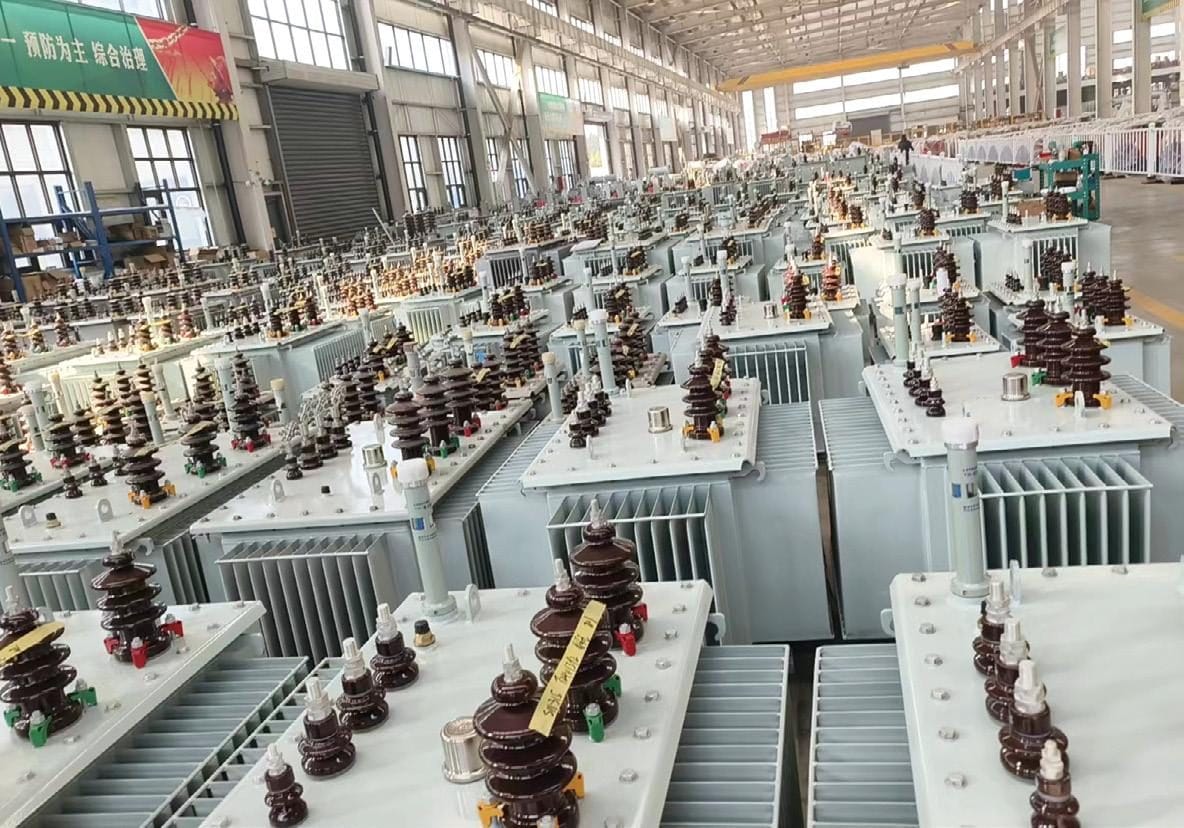
This guide is written by the engineering team of Jiangsu Tianhua Transformer Co., Ltd., a transformer manufacturer founded in 2013 in Xuzhou, Jiangsu, China. Every unit is designed, built and tested in our own 107,000 m² plant: core cutting, winding, drying, resin casting, tanks, radiators, assembly and testing. You deal directly with the factory engineers.
About Tianhua · Factory and testing · Certificates · Projects
Standard cast resin designs go up to 2,500 kVA at 10 kV and 20 kV; impregnated special designs up to 5,000 kVA. Larger units on request.
Class F (155 °C) as standard for cast resin; class H (180 °C) for VPI and high-temperature designs.
Yes, protective enclosures are available to the IP rating you specify.
Not better, but safer indoors. Dry-type has no oil and suits fire-sensitive indoor sites; oil-immersed costs less per kVA and suits outdoor sites.
Partial discharge measures small electrical discharges inside the insulation. A low value such as 10 pC shows good casting quality and a long insulation life.
Yes, inside a suitable outdoor enclosure or a compact substation.
Products
Send capacity, voltages, standard, quantity and destination. Our engineers reply with a datasheet and price within 24 hours.
Written by the Tianhua Transformer engineering team, Xuzhou, China. Last updated November 2026.