By the Tianhua Transformer engineering team · Xuzhou, China · November 2026
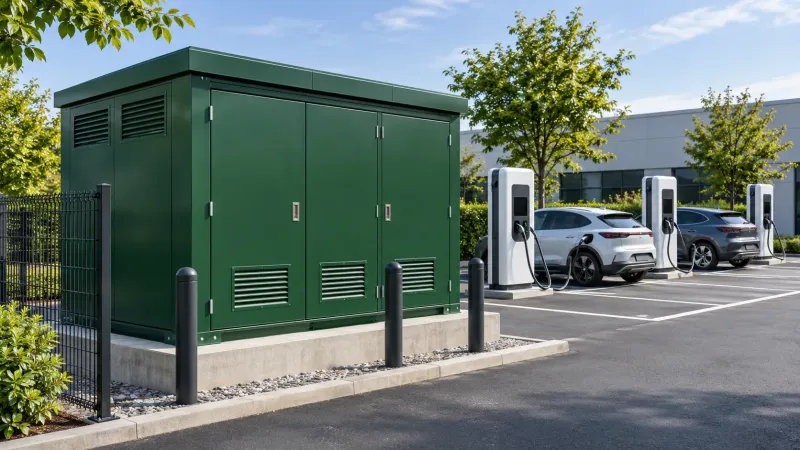
Most data centers use cast resin dry-type transformers inside the building and oil-immersed units outdoors, arranged in N+1 or 2N so one can be taken out of service without dropping the IT load. Size each transformer for its share of the load in the failure case, allow for UPS harmonics with a K-factor design, and choose low losses because the load runs 24 hours a day.
Key points
- Redundancy (N+1 or 2N) decides how many transformers you need and how heavily each is loaded
- Cast resin dry-type is the usual choice indoors; oil-immersed with natural ester fluid outdoors
- UPS and IT loads create harmonics: specify K-factor or give the harmonic spectrum
- Losses matter more than usual because the load is constant
- Large campuses need their own 110–220 kV substation, so order power transformers early
1. Redundancy sets the sizing
Data centers are designed so a single failure does not stop the IT load. The transformer arrangement follows that rule:
| Arrangement | How it works | Transformer loading in normal operation |
|---|---|---|
| N | Just enough capacity for the load | Up to 100%; no redundancy |
| N+1 | One spare unit for every group | Each unit below 100% so the spare can take over |
| 2N | Two fully independent paths (A and B) | Each path normally carries about half the load, below 50% of its rating |
Example: a 2 MW IT hall at power factor 0.95 needs about 2,100 kVA. In a 2N design each path gets a 2,500 kVA transformer; normally each carries about 1,050 kVA, and either one can carry the whole hall alone.
2. Dry-type or oil-immersed?
| Cast resin dry-type | Oil-immersed | |
|---|---|---|
| Where | Inside the building, close to the load | Outdoor yards, MV substations |
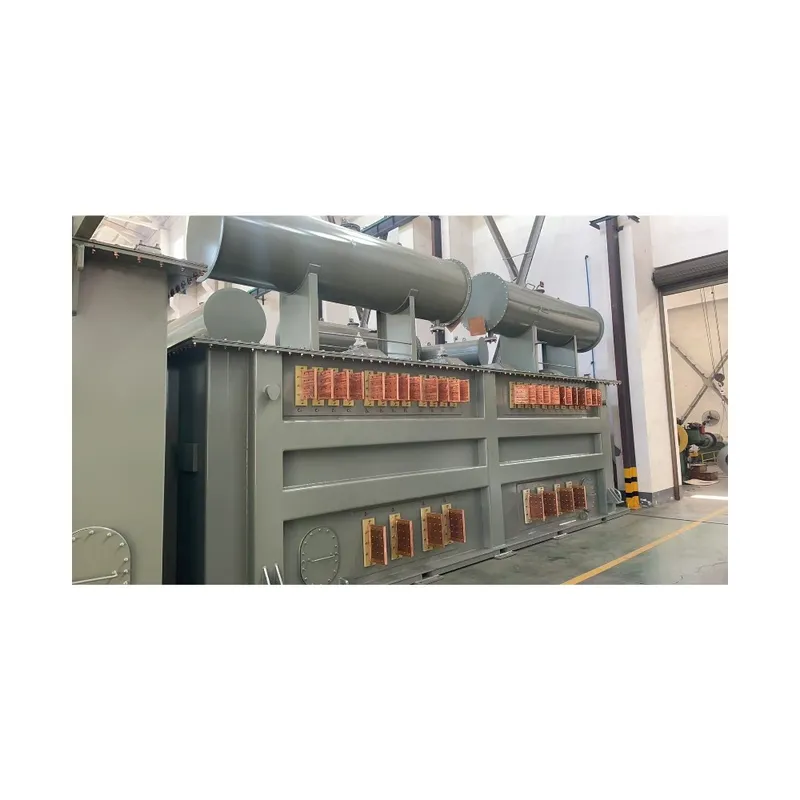
| Fire risk | No oil; self-extinguishing resin | Needs bunds and fire separation; natural ester fluid reduces risk |
| Typical ratings | 1,000–3,150 kVA per unit | Up to MVA ratings for campus substations |
| Maintenance | Minimal; clean dust, check sensors and fans | Oil checks; sealed units need little |
3. Harmonics, K-factor and temperature
UPS rectifiers, server power supplies and cooling drives draw non-sinusoidal current. Harmonics add eddy current loss in the windings, so a standard transformer runs hotter than its nameplate suggests. Specify a K-factor design (for example K-4 or K-13) or give the harmonic spectrum, and fit temperature sensors with alarm and trip contacts linked to the building management system.
4. Losses and efficiency
Data center transformers run at a steady load all year, so both no-load and load losses translate directly into energy cost and cooling load. Low-loss cast resin designs such as SCB18 or amorphous SCBH15 reduce both. Because 2N units run at low load, no-load loss is especially important.
5. The campus grid connection
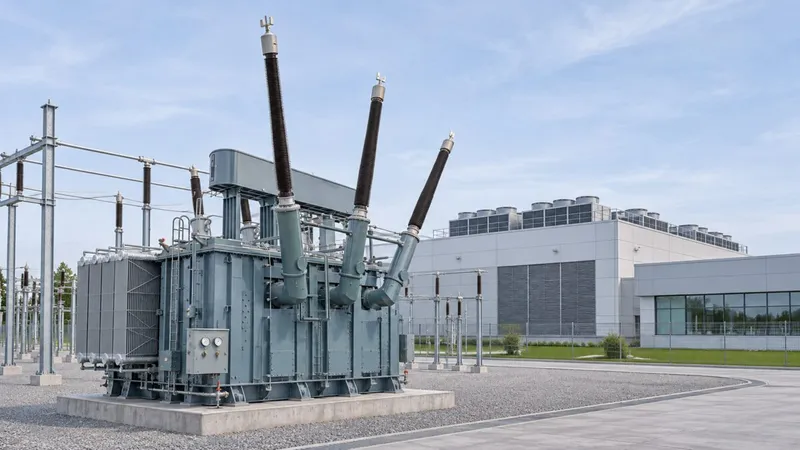
Hyperscale and AI campuses often need tens or hundreds of MVA, supplied from their own 110 kV, 132 kV or 220 kV substation. Grid transformers have the longest lead time in the project, so specify and order them as early as the grid connection is agreed. See the power transformer buying guide.
How Tianhua can help
Tianhua makes K-factor and low-loss cast resin transformers, amorphous dry-type units, oil-immersed distribution transformers and 110–220 kV power transformers for data center campuses.
- Data center solutions
- K-factor dry-type transformer
- SCB18 energy-efficient dry-type transformer
- SC(B)H15 amorphous dry-type transformer
- 110 kV power transformer
Jiangsu Tianhua Transformer Co., Ltd. is a transformer manufacturer founded in 2013 in Xuzhou, China, with a 107,000 m² plant, 500+ employees and exports to more than 30 countries and regions. About Tianhua · Factory and testing · Projects
Frequently asked questions
What type of transformer is used in data centers?
Mostly cast resin dry-type transformers inside the building, and oil-immersed transformers outdoors and in the campus substation.
What size transformer do I need for a 1 MW data hall?
At power factor 0.95, 1 MW is about 1,050 kVA. Depending on redundancy and growth, a 1,250 or 1,600 kVA transformer per path is typical.
What is a K-factor transformer?
A transformer designed to carry harmonic currents from non-linear loads such as UPS and server power supplies without overheating.
What does 2N mean for transformers?
Two independent power paths, each able to carry the full load. Each transformer normally runs at about half load.
How early should we order the grid transformer?
As soon as the grid connection voltage and capacity are agreed. Power transformers are made to order and have the longest lead time in the electrical package.
Designing a data center power system?
Send your load list, single-line diagram or specification. Our engineers reply with a recommendation, datasheet and price within 24 hours.
More: Data center solutions · All solutions · Transformer selection guide · FAQ